
Selecting the proper spray nozzle is crucial for effective spraying. I cannot emphasize enough how important it is to choose the right nozzle type and size for your specific spraying needs.
The spray nozzle you choose determines key factors like:
- Application rate
- Droplet size
- Spray coverage and uniformity
- Drift potential
In this comprehensive guide, as a professional spray nozzles supplier, I’ll walk you through the exact step-by-step process I use to select the optimal spray nozzle.
By the end, you’ll know how to choose the perfect nozzle for any spraying job.
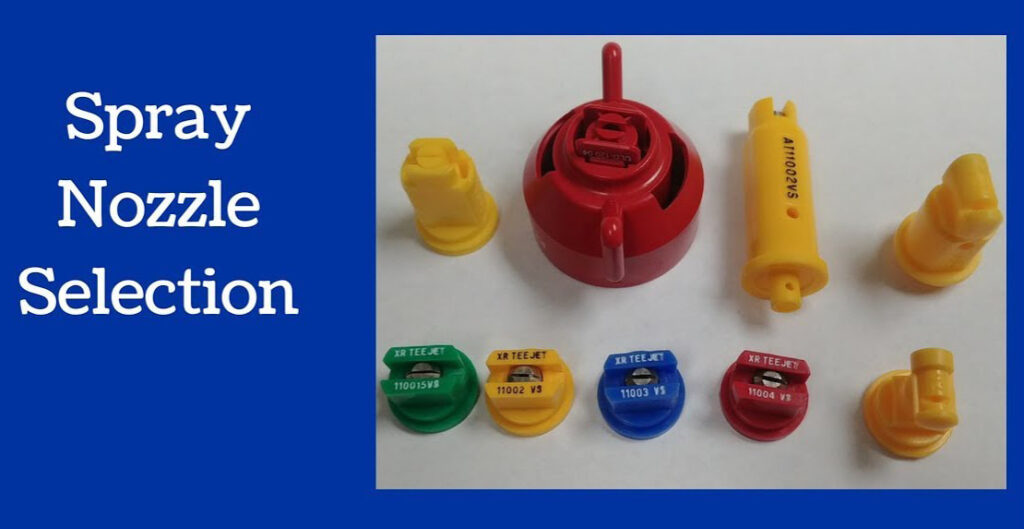
Why Spray Nozzle Selection Matters
With so many nozzle types, sizes, flow rates, and materials available, it can get confusing to pick the right one.
But selecting an improper spray nozzle can lead to:
- Ineffective applications requiring resprays
- More pesticide use
- Legal issues from drift
- Higher costs
Even a nozzle with 10% wear may fail to provide the coverage and performance you need. And while nozzles are inexpensive, the consequences of choosing the wrong one are not.
How to Choose the Right Spray Nozzle
Follow this 5-step process to select the optimal spray nozzle every time:
Step 1: Identify Your Needs
Before assuming what nozzle you need, clarify your needs and objectives, including:
- Are you prioritizing drift reduction or coverage?
- What pests or crops are you targeting?
- Do you require specific droplet sizes or flow rates?
- What were any issues with your previous nozzle?
Reviewing your unique needs first provides direction for choosing the best nozzle.
Step 2: Determine the Required Flow Rate
Most spraying falls into one of three categories:
- Pre-seed burnoff sprays from 3-7 gallons per acre (GPA)
- Early in-crop post-emergence sprays around 7-10 GPA
- Late-season high canopy sprays from 10-20 GPA
Calculating the required nozzle flow rate (gallons per minute or GPM) requires knowing:
- Application volume (GPA)
- Travel speed (MPH)
- Nozzle spacing
For 20-inch spacings, use this formula:
GPM = (GPA x MPH x Spacing) / 5940
Online calculators also simplify this calculation.
Once you compute the target GPM, match it to a nozzle flow rate table for your pressure range. Selecting a nozzle in the middle of your operating range allows flexibility.
Step 3: Pick The Nozzle Type
For general spraying, I recommend nozzles producing Medium, Coarse and Very Coarse droplets. Types include:
- Flat fan: Broadcast spraying
- Flood: High flow fertilizer and pesticide spraying
- Cone: Spot treatments
Weights droplet size and coverage against drift potential to suit your needs.
Step 4: Adjust for Conditions
Choose a nozzle producing larger, coarser droplets if drift risks are high from weather or proximity.
For pesticides requiring foliage penetration, select finer droplet nozzles designed for canopy spray retention.
Check label guidance on optimal droplet size.
Step 5: Confirm Performance
Conduct test sprays with clean water and observe coverage uniformity before spraying chemicals.
Replace tips showing distorted spray patterns or inconsistent flows.
Consistently inspecting nozzle condition and spray distribution is essential for effective applications.
Following this systematic nozzle selection process will improve efficacy while reducing spray drift and waste.
Key Nozzle Selection Factors
Beyond the 5-step methodology, several additional factors guide spray nozzle choices:
Nozzle Types
Common nozzle types include:
Flat spray: Broadcast herbicide and insecticide spraying
Flood: High-volume fertilizer and chemical spraying
Cone: Spot and directed spraying
Flow Rate and Pressure
Higher pressures produce smaller, drift-prone droplets. Lower pressures create larger droplets.
But each nozzle also has an ideal pressure range for performance, so review manufacturer guidance.
Droplet Size
Controlling droplet size manages treatment efficacy and drift potential.
Typical size classifications are:
- Ultra Coarse: Lowest drift risk but also less retention
- Very Coarse
- Coarse: Minimizes drift
- Medium: Balances efficacy and drift
- Fine: Maximizes coverage and canopy penetration but prone to drift
Compare your target droplet size to the nozzle’s catalog specs.
Angle and Boom Height
- The spray angle determines the width of the application band. Generally, 110° nozzles allow lower boom heights than 80° nozzles.
- The appropriate height is essential for proper overlap and preventing gaps or misses between nozzles.
Consult manufacturer spacing guidelines.
Calibrate the Sprayer
Regularly test and calibrate your sprayer to confirm that your chosen nozzle, pressure and speed provide accurate flow rates and distributions.
Catch test samples at the nozzles and adjust as needed. Poor calibrations lead to ineffective or dangerous applications.
Carefully following this spray nozzle selection system will improve efficacy while protecting crops, equipment and the environment.
Let me know in the comments if you have any other spray nozzle tips!
Frequently Asked Questions
How often should spray nozzles be replaced?
Inspect spray nozzles before each season and replace them if you notice wear, damage or non-uniform spray patterns.
Generally, expect to replace brass nozzles annually. Plastic nozzles may last 2-3 years while stainless steel tips can survive 4-6 years. Ceramic nozzles last the longest at over 20 years.
How do air induction nozzles work?
Air induction nozzles pull air into the nozzle body and mix it with the spray liquid. When the liquid discharges, it forms a coarse spray pattern. The injected air produces larger droplets to reduce drift.
What size nozzle do I need?
Use the following formula to calculate the required nozzle size:
GPM = (GPA x MPH x Spacing) / 5940
Where:
- GPM = Required flow rate (gallons per minute)
- GPA = Target application rate (gallons per acre)
- MPH = Travel speed (miles per hour)
- Spacing = Nozzle spacing (inches)
Match the computed GPM to a nozzle type that meets your needs.