
Wondering if you should use a brass or copper nozzle with your 3D printer? As someone who’s been in the 3D printing game for years, this is a common question I get from beginners and pros alike.
And there’s good reason for the confusion. Both brass and copper have their advantages and disadvantages when it comes to 3D printer nozzles.
In this in-depth guide, as a professional nozzles supplier, I’ll compare brass vs copper nozzles across a range of factors like durability, thermal performance, ease of use, compatibility with materials, and more.
By the end, you’ll know exactly which type of nozzle is right for your specific 3D printing application.
Let’s dive in!
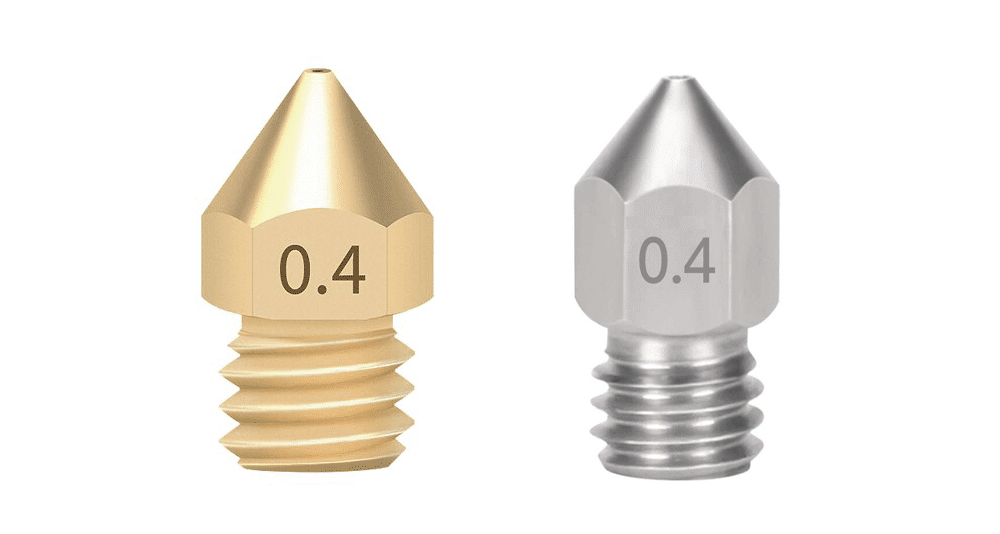
Brass vs Copper Nozzle Overview
First, a quick refresher on what exactly brass and copper nozzle materials are all about.
What is a Brass Nozzle?
Brass nozzles are the most common type of nozzle used in 3D printing today. They are an alloy made primarily of copper and zinc.
Brass offers an unbeatable combination of low cost, great heat transfer properties, and good durability. This makes it a reliable, all-around performer for most filament types.
However, brass does have its downsides. The main limitation is that it wears quickly when used with abrasive materials like glow in the dark or carbon fiber filaments.
What is a Copper Nozzle?
As the name suggests, copper nozzles are made completely from copper metal. In some cases, they may have a nickel-plating to improve durability.
The key advantage of copper is that it offers superior thermal conductivity compared to brass. This allows you to print at very high speeds without losing detail or accuracy.
However, copper is generally more expensive than brass. And like brass, copper also wears rapidly when used with abrasive filaments.
Now that you understand the core differences between these two nozzle materials, let’s take a deeper look at how they compare across some key performance criteria.
Brass vs Copper Nozzle: Complete Comparison
Durability and Wear Resistance
One of the main factors to consider when choosing a nozzle material is durability.
After all, you don’t want to be replacing your nozzle every few weeks. The more durable the nozzle, the less downtime you’ll have in your printing schedule.
So which is more durable — brass or copper?
The short answer is: brass.
Brass nozzles are slightly tougher and more wear-resistant compared to pure copper. So if you mainly print with non-abrasive materials like PLA and PETG, a brass nozzle will easily last 6 months or longer.
Copper wears more rapidly in comparison. Unless it’s nickel-plated, you may need to replace a copper nozzle after just 3-4 months of regular use.
However, I should note that any nozzle will wear out quickly if used frequently with abrasive filaments. In that case, I recommend a hardened steel nozzle which is designed specifically for tough, abrasive materials.
The Verdict?
- For non-abrasive materials, brass offers better durability and value over time.
- For abrasives, use a specialty nozzle like hardened steel.
Thermal Conductivity and Performance
Another key consideration is thermal performance.
A nozzle’s ability to quickly and evenly transfer heat has a massive impact on print quality.
In terms of thermal conductivity, copper is the clear winner over brass.
Pure copper has nearly twice the thermal conductivity rating of brass, at 401 W/mK verses 109 W/mK.
What does this mean for your real-world 3D printing?
Well, the exceptional heat transfer properties of copper allow it to melt filament faster. This means you may be able to print faster while maintaining accuracy.
The flip side is that a copper nozzle will also cool faster compared to brass when idle. So you may need to experiment with tweaking settings in your printer’s firmware to account for this.
Also keep in mind that a nickel-plated copper nozzle won’t have quite as high of thermal conductivity as pure copper. But it should still outperform brass.
So if print speed and fine details are critical for your 3D printing application, a copper nozzle is my recommendation. The blazing-fast heat transfer will provide that extra level of thermal precision needed for high-quality prints.
However, if you mainly print functional prototypes at average speeds, a brass nozzle will likely meet your needs just fine.
The Verdict?
- Copper offers vastly superior thermal conductivity essential for fast, high-precision printing
- Brass strikes an excellent balance between thermal performance and affordability
Ease of Use
While thermal conductivity and durability impact print quality, you also want a nozzle that’s easy and straightforward to use day-to-day.
So let’s now talk about how brass and copper compare when it comes to practical factors like cleaning & maintenance.
Starting off with maintenance — in my experience copper nozzles are noticeably more difficult to clean compared to brass.
Copper seems more prone to material build-up and charring. And once residue forms, it can be challenging to remove. This may translate into increased frequency of jams or clogs over time.
On the other hand, brass offers a smooth goldilocks surface that’s harder for filament to stick to. Brass nozzles clean out easily with the right technique and tools.
As far as cleaning tools, I recommend using high-precision drill bits to scrape out any hardened material from inside a nozzle’s bore.
You can also use a handheld butane torch to burn it out. But take extreme care not to overheat the nozzle body itself while cleaning. I once melted a hole clean through a brass nozzle learning this the hard way!
When it comes to swapping nozzles, both brass and copper are equally easy to install and remove. Just be sure to heat up your hot end first, and always use the right sized wrench so you don’t strip the sides. Here’s a video showing the basic process:
One last thing I’ll note on the maintenance front — copper loses heat faster than brass when your hot end is idle.
So you may find yourself doing “cold pulls” less frequently with a copper nozzle to clear partial clogs.
The Verdict?
- Brass cleans significantly easier than copper
- Both nozzles are equally straightforward to install and remove
- Copper may require less frequent cold pulls
Compatibility With Filament Types
Not all nozzles play nicely with every type of filament. So material compatibility is key, especially if you use exotic filaments.
Out of the two options, brass tends to offer the most flexibility in terms of filament compatibility.
The majority of standard materials like PLA, PETG, ABS, TPU, and nylon print excellently with a brass nozzle. Brass can also handle wood or metal-fill composites reasonably well too.
Copper also works with all the above materials. However, some users report copper performing better with tricky filaments like flexible materials. This may come down to nuanced factors related to heat transfer.
One type of filament that tends to struggle with both brass and copper is glow in the dark. The glass microparticles make it highly abrasive, causing rapid wear. A hardened steel nozzle is really the only way to go for glowing filaments.
Also keep in mind that some of the more advanced filaments like ULTEM 9085 require 400+ degree Celsius hot ends. So in that case, you’d need an upgraded hot end system anyway and likely a specialty nozzle to match.
The Verdict?
- Brass offers the widest filament compatibility overall
- Copper seems to excel with exotic flexible materials
- Avoid brass or copper nozzles with highly abrasive filaments
Cost Comparison
Last but not least, let’s talk dollars and cents. As with most products, you typically get what you pay for when it comes to nozzle quality and performance.
An authentic name brand brass nozzle from a leading manufacturer such as E3D or Slice Engineering will set you back $15-25.
That may sound steep for such a tiny part. But keep in mind these companies produce incredibly high precision nozzles built to tight machining tolerances.
Off-brand brass nozzles made in China can cost as little as $4-8. The quality is hit or miss though. I’ve had great luck with some cheap nozzles, while others clogged the first time I used them.
Once you step up to copper nozzles, the prices rise across the board.
Genuine E3D and Slice copper nozzles sell for $30 to $50 — easily 4X the cost of their brass counterparts.
There are affordable options available however. Matterhackers offers nickel-plate copper nozzle for around $15. And TriangleLab sells V6 copper plated nozzles for only around $9 on AliExpress.
So while copper does cost more than brass, you can still find competitively priced options if you search around a bit.
The Verdict?
- Authentic name-brand brass nozzles offer the best value
- Bargain brass nozzles can be found for <$10, but quality varies widely
- Copper universally costs more — expect to spend $15+ even for basic models
Brass vs Copper Nozzle: Final Verdict
So there you have it — everything you need to know about choosing between brass vs copper 3D printer nozzles.
While copper offers tantalizing benefits in terms of thermal performance and precision, brass strikes the best balance overall for most users.
Brass is more affordable, durable, and flexible when it comes to material options. For high quality prints, it gets the job done with minimal fuss or maintenance.
Meanwhile, copper truly shines for high speed printing applications where every degree Celsius matters. The unmatched heat transfer properties allow exceptionally fast and accurate prints.
I suggest keeping a brass nozzle installed as your daily driver, and have a copper nozzle on standby for specialty prints.
And if you ever plan to print with exotic abrasive composites, upgrade to a wear-resistant hardened steel nozzle.
Combining the right nozzle material with quality filament, proper slicer settings, and regular printer maintenance is the formula for stunning prints.
Let me know if you have any other questions about nozzles down below! I’m always happy help.