
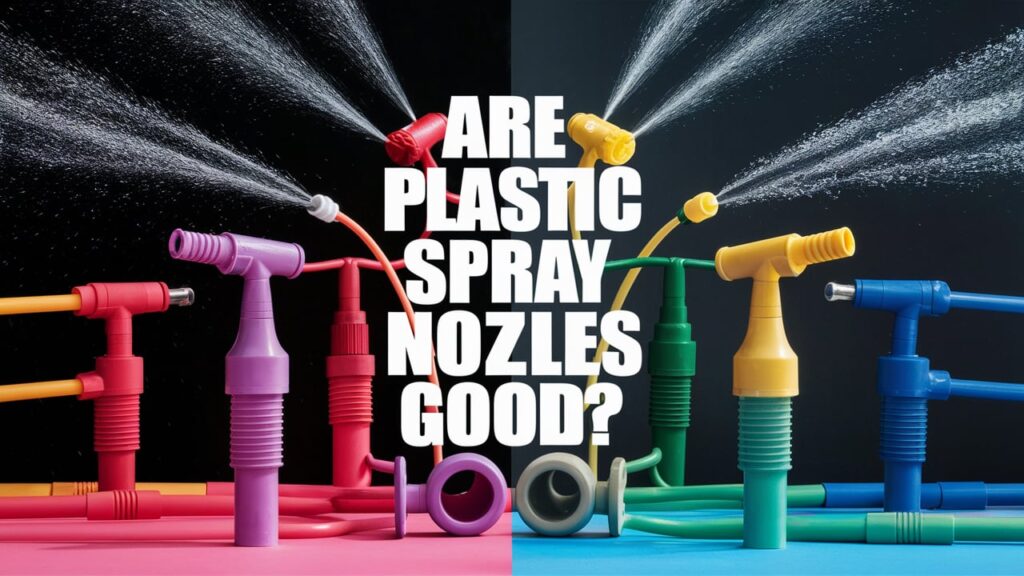
Plastic nozzles have become increasingly popular across various industries due to their affordable cost and resistance to corrosion. However, some key considerations remain regarding their durability, temperature ratings, and performance capabilities compared to metal alternatives. As a professional plastic spray nozzles manufacturer, I am writing this guide to examine the pros and cons to determine if plastic nozzles are in fact a good option.
What Are the Main Benefits of Using Plastic Nozzles?
Plastic spray nozzles offer three standout advantages that explain their surging popularity:
Cost Savings
Plastic is cheaper to manufacture than metal alloys. These material savings translate into plastic nozzle prices 30% to 50% lower than steel or aluminum models with similar specifications. Their affordable cost makes them attractive for applications requiring large quantities of nozzles.
Corrosion Resistance
Most plastic compounds demonstrate high corrosion resistance. Unlike metals, sprayed fluids or gaseous media do not cause material degradation in plastics. Even acidic or basic solutions with pH ranges under 2 or over 12 do not affect popular plastics like nylon, polypropylene or PVDF. Their immunity to corrosion suits them for demanding chemical environments.
Customization Options
Plastics allow molding intricate, customized nozzle designs impossible with machined metals. Complex flow passages tailored to user needs optimize spray performance. Color coding by plastic type enables easier visual inspections. Other custom options like anti-drip valve integration suit specific applications.
What Are the Downsides of Plastic Nozzles?
For all their advantages, plastic nozzles also come with limitations users should acknowledge:
Temperature Ratings
Unlike metal alloys, plastics have low melting points ranging between 200°F and 500°F. Plastic nozzle applications cannot exceed these thresholds without risk of deformation or failure. Steels and nickel alloys with over 2000°F ratings better suit extremely hot spraying environments.
Abrasion Resistance Issues
Most commodity plastics wear faster than metals when subjected to particle erosion or repeated use. Abrasive fluids quickly damage nozzle flow passages and outlets. Careful material selection suits less abrasive environments better. Hard coatings on plastics provide limited improvements.
Strength and Pressure Issues
While thermoplastics demonstrate yield strength comparable to aluminum, their elastic moduli are lower. This restricts use of plastic nozzles to under 1000 psi pressures in most cases. critical structural components needing high pressure capabilities are better served by steel or titanium parts instead.
Durability Concerns
Repeated long-term use inevitability degrades the estimate 5-7 year lifespan for common plastic nozzle variants under moderate conditions. Environmental factors easily reduce this further. By comparison, stainless steel nozzles often operate reliably for over 30 years before needing replacement, provided proper maintenance.
Best Applications for Plastic Spray Nozzles
The advantages and limitations highlighted above guide selection to best-fit applications maximizing plastic nozzle benefits:
Low Pressure Spray Systems
Plastic nozzles suit spray systems operating under 1000 psi extremely well. This covers most low to medium pressure sprayers used in agriculture, irrigation, food processing, and other general industrial applications. Their combination of affordability and chemical resistance make them the economical choice here.
Corrosive Chemical Environments
Applications spraying acids, bases, oxidizers, solvents, or other corrosive media minimize material degradation risks by using corrosion-proof plastic nozzles. Glass-filled plastic compounds withstand moderate abrasion without significant nozzle wear too. Keeping pressures under 400-600 psi avoids mechanical failures.
Short to Medium Lifespan Systems
Budget-conscious applications needing nozzles lasting around 5 years find plastics well-suited. Their lower cost balances expected replacement needed afterwards. Restricting operation to moderate temperatures and pressures optimizes lifespan. Examples include brewing, waste management, and water treatment systems.
Better Alternatives to Plastic Based on Specific Needs
While plastics adequately serve most common nozzle needs , more demanding applications still favor metal alternatives:
High Pressure Over 1000 psi Systems
Applications like water jet cutting and other high pressure wash systems utilize pressures over 10,000 psi. Plastic nozzles cannot handle these levels. Titanium, tungsten carbide, or advanced ceramics like silicon or boron nitride suit these needs despite their higher costs.
Extreme Temperature Environments
Plastic nozzle limitations in hot spraying environments make high-grade steel and nickel-chromium alloys better suited here. Refineries, chemical plants, smelters and similar challenging areas reliably utilize metal nozzles rated for over 1500°F temperatures despite their added expense.
Long Lifespan Requirements
Critical applications like aerospace and electronics manufacturing demand reliable nozzles offering 20+ year lifespans. Stainless steel, hastelloy and similarly durable alloys justify higher initial investment here. Their minimal maintenance needs over decades of use reduce overall ownership costs.
Key Considerations When Selecting Plastic Nozzles
Keep these guidelines in mind when choosing plastic spray nozzles:
- Verify chemical compatibility against fluids to be sprayed to minimize degradation risks.
- Establish clear operating temperature and pressure limits allowing safety margins of at least 20%.
- Select abrasion-resistant plastic types like PVDF or nylon if spraying contains particulate.
- Get UNDOT pressure vessel safety ratings proving structural integrity.
- Confirm mold flow modeling ensures optimal outlet fluidic behavior.
- Make certain quick-connect couplings withstand expected mechanical forces.
The Bottom Line – Are Plastic Nozzles a Good Choice?
The right question regarding any nozzle is whether it fits the application needs from both technical viability and economic perspectives. Viewed this way, plastic nozzles serve remarkably well across approximately 80% of typical industrial spray uses.
Operating conditions staying within temperature, pressure, and abrasion limits expected of properly selected plastics makes them the superior economic choice. However, more extreme environments do require shifting to costlier but technically better-suited metals instead. This careful alignment between spray application needs and nozzle capabilities makes plastics a good selection under common usage conditions. Their ease of customization also suits user-specific optimizations.
In conclusion, spraying processes not exceeding solidly-established plastic nozzle working limits find them highly cost-effective. More demanding situations warranting exceptional temperature, pressure or environmental tolerance mandate metal alternatives regardless of their higher prices. Avoiding excessive technical expectations of plastics paired with their easier customization gives users an excellent balance of capability and cost-efficiency. This allows labeling plastics as a genuinely good spray nozzle choice within recommended usage constraints.